BTS members start a new life together with Y·N
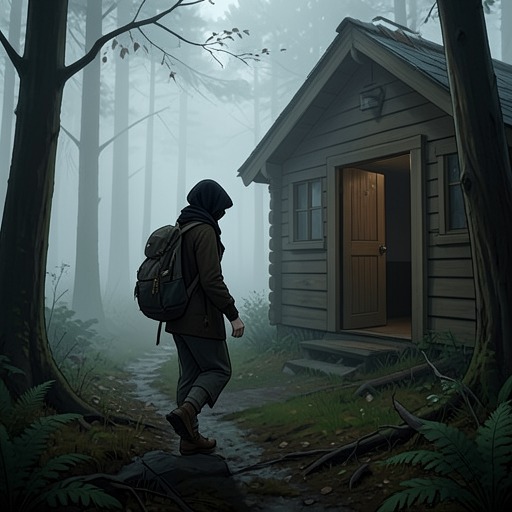
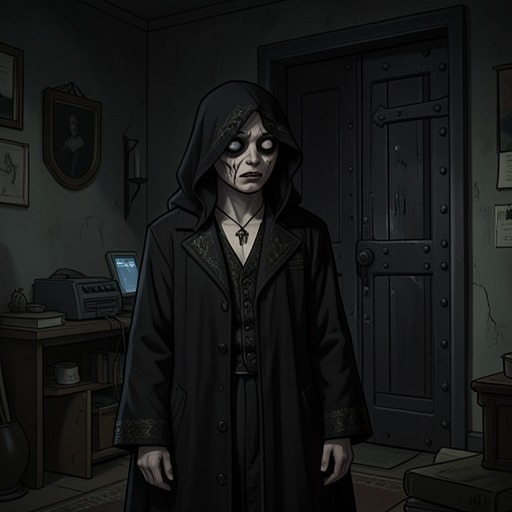
Living with 7 vampiresBTS members and Y/N begin a shared new life after the supernatural conflict has been forcibly reset. The event is decisive because it converts a history of abandonment, captivity, bodily danger, divided identity, and manipulated memory into an apparently ordinary household in which Y/N attends college and the seven men occupy recognizable domestic and working roles. Its calm is therefore not a simple return to normality: it is a new arrangement built after Assiah makes the group disappear and sends Y/N to a new home, leaving the past hidden behind familiar routines.
From Abandonment to a New Household
Y/N’s shared life begins against the memory of an earlier rupture. At sixteen, Y/N is identified as a girl, and her adoptive mother abandons her by opening the car door, telling her to go outside, then driving away before Y/N can follow. The scene establishes separation as the condition from which the later household must be understood. Y/N is not merely moving into a different residence; she is being displaced from the family structure she believed defined her.
That displacement is compounded by the discovery that the woman who raised Y/N is not her biological mother. Y/N asks who her real parents are and why they abandoned her, turning the question of family into one of the story’s central unresolved wounds. The later shared home answers that wound socially rather than genealogically. Y/N’s belonging comes through continued association with BTS members, even after the supernatural explanation of that association has been removed from her accessible memory.
The transition is also marked by repeated changes in place and bodily control. A shadow pulls Y/N through a mirror whose surface feels like water, trapping her inside the mirror world. In another crisis, someone grabs her from behind just as she tries to run. A red light then falls upon her beneath a blood-red moon, releasing her movement. These episodes make freedom unstable: Y/N repeatedly enters spaces where others control her body, only to regain agency through an external intervention or a newly awakened power. The later household reverses that pattern by presenting shared life as a place where movement, study, work, and ordinary meals are possible.
The Reset and the Reassembled Family
Assiah oversees the decisive break between the old world and the new one. After the conflict, Assiah asks the others to stand together in a small group, focuses energy, and makes them slowly disappear. The disappearance is not described as a natural departure or a voluntary migration. It is an act of supernatural rearrangement that separates the characters from the lives they have just endured and prepares their placement in a new social reality.
The reassembly does not erase every trace of the former group’s identity. Instead, it preserves the practical fact that the members remain together and that Y/N becomes connected to them again. Y/N remembers that, since the group moved in, life has been fun. The new home is thus characterized less by an explanation of its origin than by an emotional and domestic effect: solitude has been replaced by companionship, and an existence once organized around fear now contains routine and amusement.
The event’s most important ambiguity lies in the difference between objective history and Y/N’s point of view. Y/N wakes in the morning to an alarm, gets up while still half asleep, and later walks to a bus stop while eating a sandwich. The scene is narrated as a normal day, but the reader knows that this normality follows memory alteration and the suppression of supernatural knowledge. The everyday sequence functions as evidence of successful reintegration while also preserving the unsettling question of what has been taken from Y/N in exchange for safety.
Domestic Roles and Everyday Cooperation
The new household is organized through a division of occupations and habits. Most of the men are no longer in college. Jin is mostly at home and is compared to a motherly presence, suggesting that domestic care has become part of his role. RM works, although he has never told Y/N where. The lack of detail surrounding his employment reinforces the selective quality of the new life: Y/N knows enough to treat the household as familiar, but not enough to recover its hidden structure.
J-Hope works at an animal veterinary clinic and sometimes returns home with blood bags, which he explains as being for research. The explanation gives a mundane professional cover to an object strongly associated with the group’s concealed nature. Blood therefore survives in the new life as a practical detail that can be interpreted innocently, even though earlier Y/N was treated as the only human blood vessel among the group. V had challenged Y/N by asking who the only blood vessel was, while Y/N rejected the label and insisted that she was not one. The shared household changes the social meaning of that conflict: Y/N is no longer introduced primarily as a source of blood, but the blood bags still preserve the old danger beneath the domestic surface.
Jimin, V, and Jungkook attend college with Y/N. Their attendance at the same college is explained through the possibility that they are interested in it as well, but the arrangement also keeps the group physically connected during Y/N’s daily life. The college becomes a shared public space rather than an isolated setting for Y/N alone. The men’s presence makes the new life communal even when their past is not discussed.
The routine includes small gestures of mutual care. After school, Taehyung appears, explains where he has been, and gives everyone rice balls. The food is an especially concrete sign of the household’s altered rhythm: instead of a scene centered on blood, pursuit, or imprisonment, the group gathers around something prepared and distributed as an ordinary kindness. The new life is sustained through these modest exchanges, which make the supernatural group legible as roommates and companions.
Y/N’s Agency Within the New Arrangement
The reset changes what Y/N can know, but it does not entirely remove the history of her resistance. Earlier, when faced with the choice between pursuing the truth about her parents and saving companions trapped in a dark bubble, Y/N decides that saving them matters more than knowing who or what her parents are. That decision establishes an ethical priority: chosen bonds take precedence over biological origins. The new life follows the same principle, because Y/N’s place among BTS members is grounded in shared existence rather than recovered ancestry.
Y/N also develops direct control over the power that once made her vulnerable. After joining hands with her light and dark selves in a triangle, Y/N concentrates with them. When she later moves her right arm, the chain holding her breaks, and Gehan appears frightened. Y/N identifies the reversal in their relationship by asking why Gehan would fear his own daughter. The moment transforms Y/N from an object of ritual control into the person capable of breaking the restraint. It also clarifies that the new life follows a struggle in which Y/N has actively confronted both captivity and inherited power.
Her confrontation with her mother carries the same refusal of submission. Suspended at least five meters above the ground, Y/N is told to come down because she cannot control her power. Y/N responds by questioning whether the power is meant to be taken from her or claimed by her mother, then declares that her mother is no different from her father. The new household therefore does not follow a passive rescue in which Y/N simply receives protection. It follows a conflict over ownership of her body, memory, and power, and its apparent normality depends on Y/N having asserted herself within that conflict.
The First Day of the New Life
The account of the shared household is framed by a flashback. Y/N, walking back from a part-time job, encounters a group of six, then realizes there are seven people. They stop in front of her and ask whether they can become roommates. Y/N agrees because being alone is boring, and the group responds with enthusiasm. The memory presents cohabitation as an informal, almost casual invitation, concealing the extraordinary chain of events that led to it.
That framing makes the new life feel both intimate and manufactured. Y/N’s acceptance is motivated by loneliness and the prospect of companionship, while the reader can recognize how strongly it echoes the earlier abandonment. At first, Y/N is left alone in an unfamiliar place; later, Y/N chooses not to remain alone and allows seven strangers to enter domestic life. The same social need that made abandonment painful becomes the opening through which a substitute family is formed.
The morning commute completes the contrast. Y/N leaves for college by bus, sits beside the window, and thinks about the different lives of the people at home. The household is no longer a castle, a mirror passage, or a site of ritual danger in the immediate narration. It is a group of roommates whose work and school schedules structure the day. Yet the reader’s knowledge of the suppressed past makes every ordinary detail unstable: J-Hope’s blood bags, the men’s unusual closeness, and their continued presence around Y/N all carry meanings the reset has hidden from her.
Narrative Significance
BTS members and Y/N begin a shared new life as the story’s movement from supernatural crisis into apparent domestic closure. The event gathers the narrative’s recurring oppositions—abandonment and belonging, captivity and movement, imposed identity and self-definition, blood and food, secrecy and routine—into a single altered arrangement. Y/N’s life has not been restored to the family she lost; it has been rebuilt around a chosen collective whose members now occupy the roles of roommates, workers, students, and caregivers.
The ending is consequently double. From Y/N’s perspective, the result is a pleasant and usable life: she wakes for class, travels to college, and describes the period since the roommates arrived as fun. From the reader’s perspective, the peace depends on Assiah’s intervention and on the removal of memories that once explained the group’s danger and Y/N’s origin. The shared life is genuine in its daily affection, but it is also the product of a supernatural reset. Its final power comes from that tension: ordinary happiness survives, while the buried story continues to define what that happiness has cost.